
The Uprising and the Art of Rebellion
How medieval illuminators painted England's first revolution — and why history keeps calling it a riot
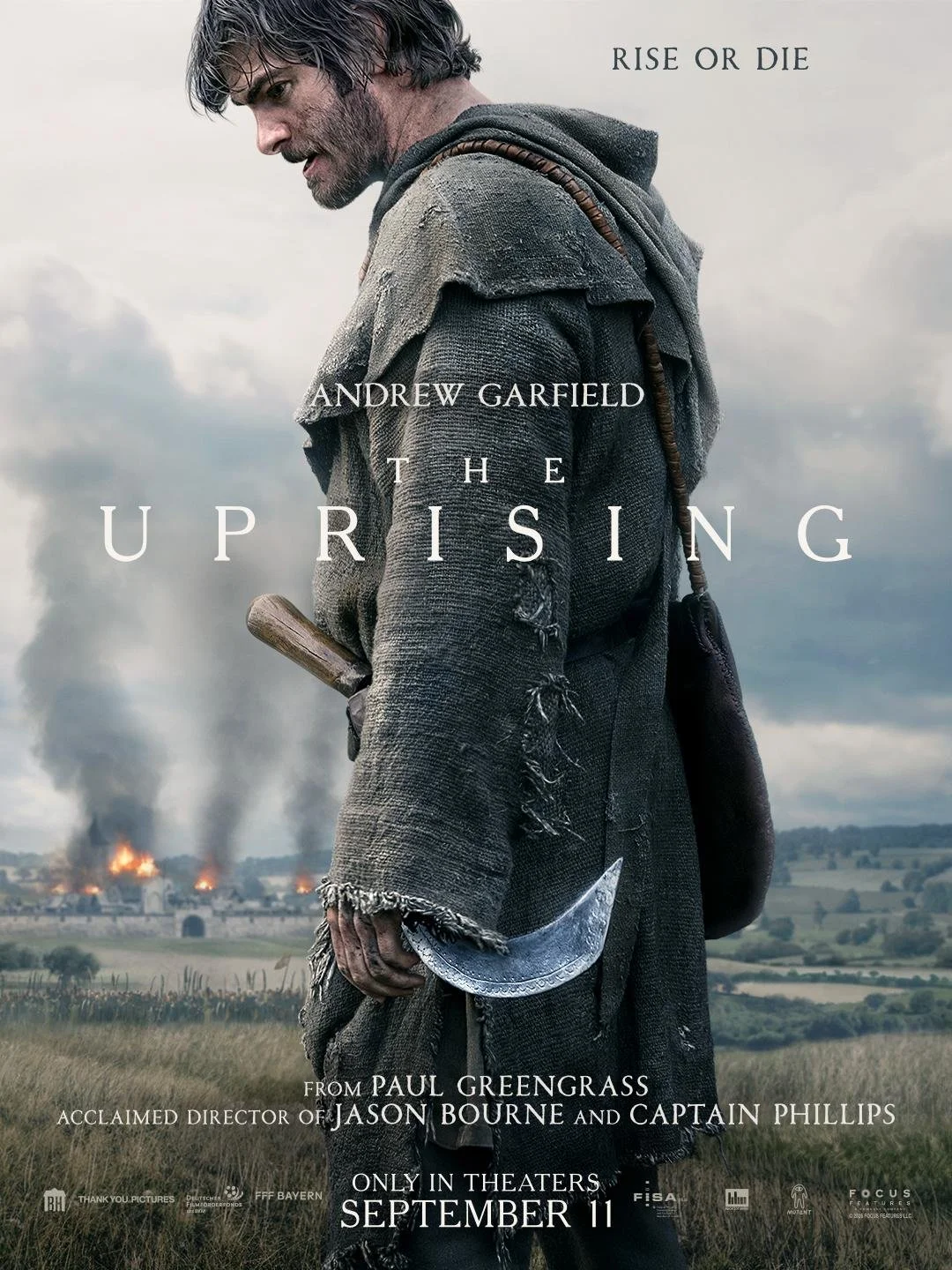
On September 11, Paul Greengrass's The Uprising hits theaters — a big-budget historical epic about something most people, especially outside Britain, have never actually heard of: the 1381 Peasants' Revolt. If you grew up in the US, there's a decent chance this got a paragraph in a textbook, if that. If you grew up in Latin America, odds are it never came up at all. Which is strange, because the rebels were reaching for something on the scale of the Magna Carta — a fundamental rewriting of who holds power in England. The Magna Carta actually got there. The peasants' revolution didn't.
And that comparison is worth sitting with for a second, because it points at what makes 1381 genuinely unusual. The Magna Carta was barons forcing concessions out of a king. The French Revolution, centuries later, was largely driven by a rising middle class that wanted a bigger seat at the table. Both were, in a real sense, people with something already pushing for more. The Peasants' Revolt was different. These were people with almost nothing pushing back from zero — not free to leave the land they worked, not free to sell what they grew, not even free to marry who they wanted without paying their lord for the privilege. Owning a small plot of land didn't mean much if you weren't free to do anything with it. And crucially, even people with that little had the political sense to know exactly who deserved the blame, and who didn't.
Let's get into how that happened.
Not a riot. A revolution.
Here's the thing you need to sit with before anything else: the people who rose up in the summer of 1381 have gone down in most histories as a disorganized mob — angry, brief, easily put down. But that framing comes from the people who actually wrote the record, and they were, almost without exception, working for the same aristocracy the rebels were rising against. They had no interest in dignifying what had just happened to them.
What actually happened had leadership. It had coordination — coded messages passed between counties. It had an agenda drafted by respected members of their own communities. And underneath all of it was an idea that was genuinely dangerous to the medieval world: that ordinary people might be capable of governing themselves. For a few weeks in 1381, that idea traveled faster than the crown could contain it.
So how does a country go from centuries of quiet, grinding serfdom to that, in the space of a few weeks? It starts, on paper, with a tax bill — though the tax itself was never really the whole story.
Where it actually started
The spark wasn't the tax itself. It was what the tax revealed. England had just rolled out a poll tax to help pay for the endless, ruinously expensive Hundred Years' War, and the thing about a poll tax is that everyone pays the same flat rate — a lord and a laborer, identically. It's an unfairness that still stings a little today, honestly. Most people just paid it. But when the crown sat down to count the returns, the math didn't work: in some places, more than a third of the population had simply vanished from the tax rolls, quietly uncounted by local officials who weren't exactly eager to turn in their neighbors.
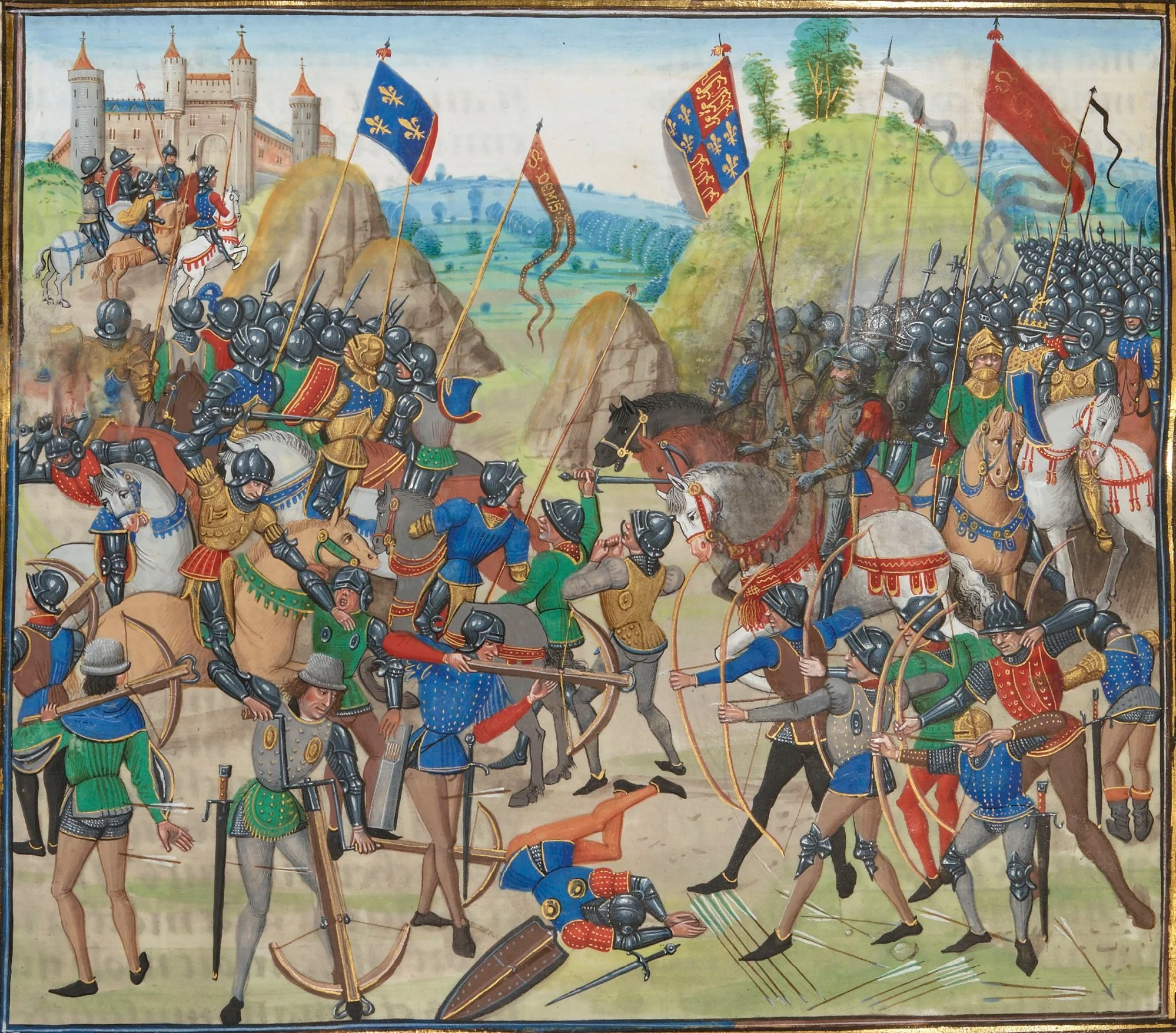
If the crown had just let that shortfall go, this whole story probably doesn't happen. Instead, they sent commissioners back out to re-investigate, town by town — and the conduct of these officials, particularly toward village women during their inquiries, became its own separate source of rage. On 30 May 1381, one of these commissioners, Thomas Bampton, showed up in Brentwood, Essex, to grill the nearby village of Fobbing over its tax return. Fobbing's men, led by a local landowner named Thomas Baker, simply refused. Bampton ordered them arrested, things turned violent, his men were driven off — and that was it. The line had been crossed, and there was no walking it back.
The ground that made it possible
None of this comes out of nowhere, though. Rewind a generation to 1348, when the Black Death tore through Europe and killed something like half the population — estimates range widely, but even conservative counts put the European death toll at around 25 million people. To put that in perspective, that's more people than live in New York City today, roughly three times over. In England alone, the population is thought to have dropped from about 4.8 million to 2.6 million in just a few years — a loss on the order of 2 million people, close to the population of a city like Houston, gone. People at the time read it as divine punishment. But if you survived it, something strange happened to your economic prospects: labor was suddenly scarce, land more available, wages actually rising. For peasants living under serfdom, this was the first real leverage they'd had in living memory. And the crown's response was to legislate that leverage right back out of existence — freezing wages, tightening the obligations of serfdom just as the plague should have loosened them.
Richard II was fourteen in 1381, and because he was anointed by God, he was essentially untouchable in the eyes of the rebels — the fault lay with his councillors. Chiefly John of Gaunt, Archbishop Simon Sudbury, and the treasurer Robert Hales, the men who'd actually engineered the tax's collection. Contemporary accounts make their lending practices sound worse than any modern loan shark. Given all of that, the surprising thing isn't that people rose up in 1381. It's that they hadn't done it sooner.
From riot to crusade
Fobbing was 30 May. What happened next didn't stay contained to one Essex village for long. Word of the standoff spread through the surrounding towns within days, and by early June the unrest had outgrown Essex entirely, gathering behind a leader of its own: Wat Tyler, a Kentish tradesman about whom history knows frustratingly little, but who by the first week of June had emerged at the head of the rebellion. By the time Tyler's men reached Canterbury on the morning of 10 June, this had stopped looking like scattered local trouble entirely. This was an organized movement, with a manifesto, willing to use targeted violence to get what it wanted. They burst into the cathedral during High Mass and demanded the monks elect a new archbishop from their own ranks, denouncing Sudbury as a traitor — who wasn't even there, since he was already back in London. (Popular memory likes to tie this moment to John Ball, the radical preacher who'd become the rebellion's spiritual voice, though the record itself only confirms they wanted Sudbury gone, not who they wanted instead.) Either way, Canterbury fell in behind them, and the march on the capital began.
Two days later, on 12 June, they camped at Blackheath on London's edge — somewhere between 30,000 and 60,000 people, depending which chronicler you believe, which is itself a sign of how hard this was for anyone to get their head around at the time. It's here that John Ball delivered the sermon he's still remembered for, opening with a line that has outlived every king in this story: when Adam delved and Eve span, who was then the gentleman? Simple question, radical answer. If the first man and woman on earth were laborers, not lords, then nobility was never God's design — it was a system invented by "naughty men" and imposed against His will. Four hundred years before Jefferson and his all men are created equal, and five hundred years before Marx gave inequality a political vocabulary, Ball had built one out of a single verse of Genesis: strip away rank, and everyone descends from the same two working people. With God apparently on their side, the rebels didn't think they were tearing anything down. They thought they were finally setting it right.
Richard retreated to the Tower of London, his cousin Henry Bolingbroke — the future Henry IV — hiding there with him. The crown just didn't have the soldiers to meet this in the field. The next morning, Corpus Christi, 13 June, the king and his lords rowed up the Thames to parley with the rebels from the safety of a barge, and told them to go home. It landed about as well as you'd imagine. The rebels responded by naming names — they wanted the king's councillors handed over. Richard said no, and the boats went back to the Tower having accomplished exactly nothing.
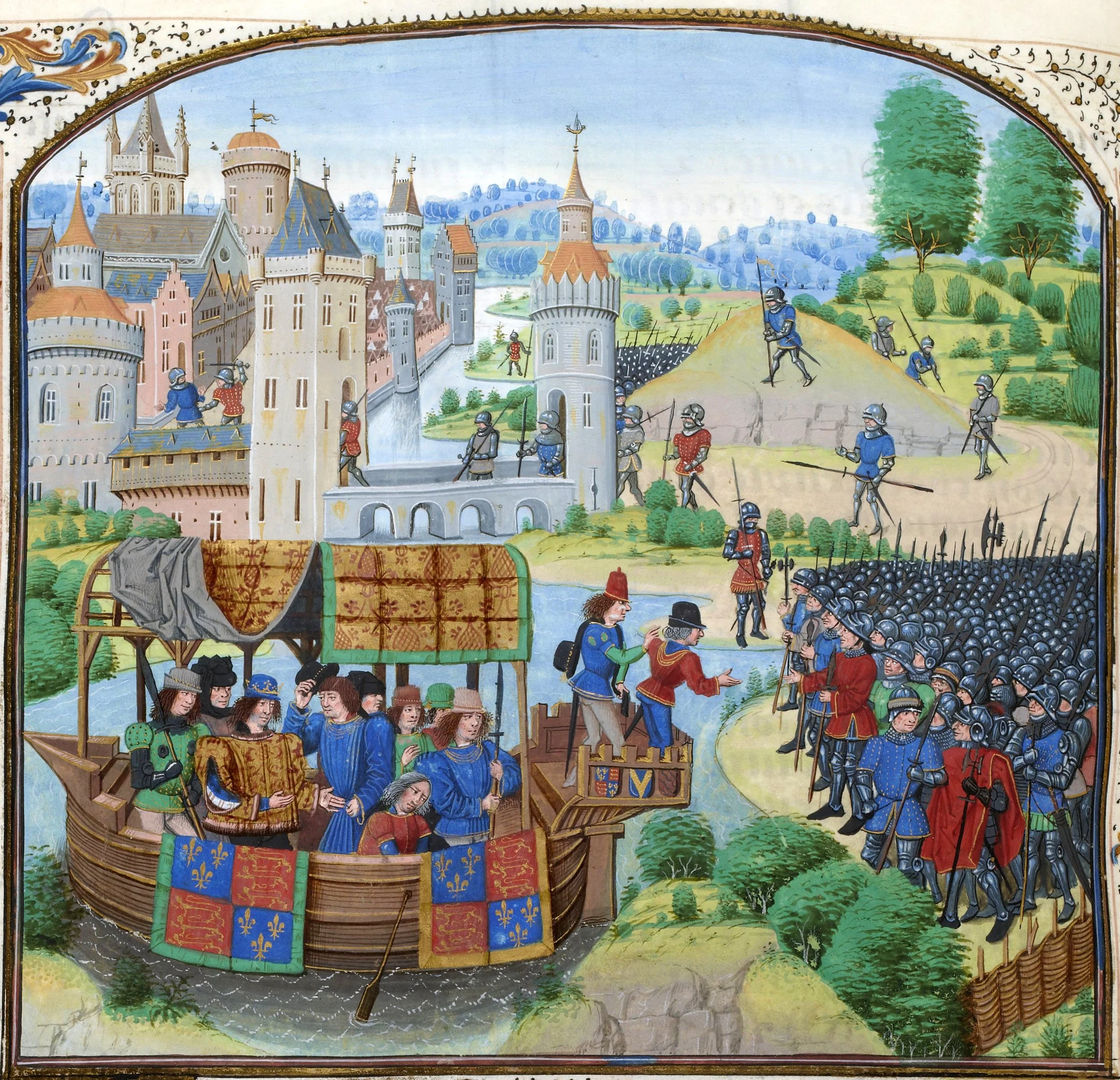
So the rebels turned toward the city itself — and by this point plenty of ordinary Londoners were quietly on their side too. The Thames was the city's last real defense, and there was only one way across it: London Bridge. The rebels swept over it into a city that had more or less opened its own gates. If you'd been watching from a doorway that day, it must have looked exactly like an invading army, except one that half the city seemed to be rooting for.
That night, their fury landed on the Savoy Palace, home of John of Gaunt himself — the man widely blamed for trying to expand royal power at everyone else's expense. What they did there wasn't looting. It was annihilation. They burned his clothes, smashed his plates, threw the pieces straight into the Thames rather than keep any of it. And this is worth pausing on, because it wasn't mindless destruction either. Days earlier, at Cressing Temple — a manor belonging to Robert Hales, the hated treasurer — rebels tore down the main house and burned the records inside, but left the barns standing untouched. Barns were useful. They stored food people needed. The target was power and the paperwork that enforced it — court rolls, rent records, tax returns — not property in general. This was punishment with an address on it, not chaos for its own sake. The Savoy was left in ruins for decades afterward, deliberately, as a warning of what happens when the peasantry rises. Gaunt himself happened to be up in Scotland negotiating a truce — a stroke of luck that must have felt almost unbearable in hindsight, because there's little reason to think he'd have survived that night at home.
By nightfall on 13 June, London Bridge had fallen, the Savoy was in ashes, and the men supposedly running the country were sealed inside the Tower with no army to send out. That's the scale of what had just happened, and it didn't stay contained to London for long. News of it spread the way news of a real catastrophe spreads. For the medieval world, this was something close to what September 11th is for ours — an event so far outside the expected order of things that everyone understood, almost immediately, that something fundamental had shifted. People who'd been treated as barely human had organized, coordinated, and brought a functioning government to its knees. Richard was, at this point, basically a prisoner in his own fortress.
Mile End, and the Tower falls
On 14 June, just two weeks after Fobbing — two weeks — Richard agreed to meet the rebels face to face at Mile End, outside the city walls. Think about how fast this moved: centuries-old rules of medieval society, shattered in a fortnight, and now a fourteen-year-old king is out negotiating with his own subjects almost as an equal. Tyler laid out the demands: end bonded labor, so peasants could work for whichever lord they chose; freedom to sell their own goods on the open market; land rents cut nationwide — which tells you this wasn't some local grievance, this was a genuine national program; and a full pardon for everyone involved in the uprising. Richard agreed to every bit of it, on the spot, in writing. Clerks started drawing up charters right there.
Feeling emboldened, the rebels pushed further and demanded the heads of the councillors they hated most. Richard agreed to that too — handing over his own advisors rather than risk the alternative.
While that meeting was still happening, a separate group of rebels did something that had literally never happened before in the Tower of London's history: they took it. The drawbridge was down and the gates open when they got there — somebody on the inside had let them in. They tore through the fortress, found Archbishop Sudbury trying to flee, and dragged him and Treasurer Hales both out. Sudbury's beheading was badly botched — chroniclers say it took several strokes. Both heads went up on poles and were paraded through the streets as proof the old order had genuinely buckled.
Trusting the king's word, most of the rebels started heading home. What they didn't know yet was that Richard's concessions were working exactly as a strategy to split the movement and disperse it — but from where the rebels stood, they'd just watched an institution as old as memory get torn down in writing, in a single afternoon. Serfdom itself, gone, signed and sealed. It's worth imagining what that must have actually felt like: something close to the disorienting euphoria of watching the Berlin Wall come down, ordinary people toppling something that had always seemed permanent — except here, unlike Berlin, the wall would quietly get rebuilt within weeks, and almost none of them knew it yet.
Not everyone was satisfied, though. A hardcore group of rebels stayed behind, unconvinced that written promises from a fourteen-year-old king were worth as much as they seemed, and wanting more before they'd call this finished. Richard — whatever else you make of him — seems to have understood by now that a final reckoning was coming, and that he'd have to face it himself, at fourteen, with basically no army behind him.
Smithfield
The next meeting was set for 15 June, at Smithfield — London's meat market then and now, and a place that already carried the smell of state violence, since it's where William Wallace had been executed decades earlier. Only three or four hundred rebels remained by this point, facing the king and his retinue. Everything about the setup suggests both sides knew this was the endgame.
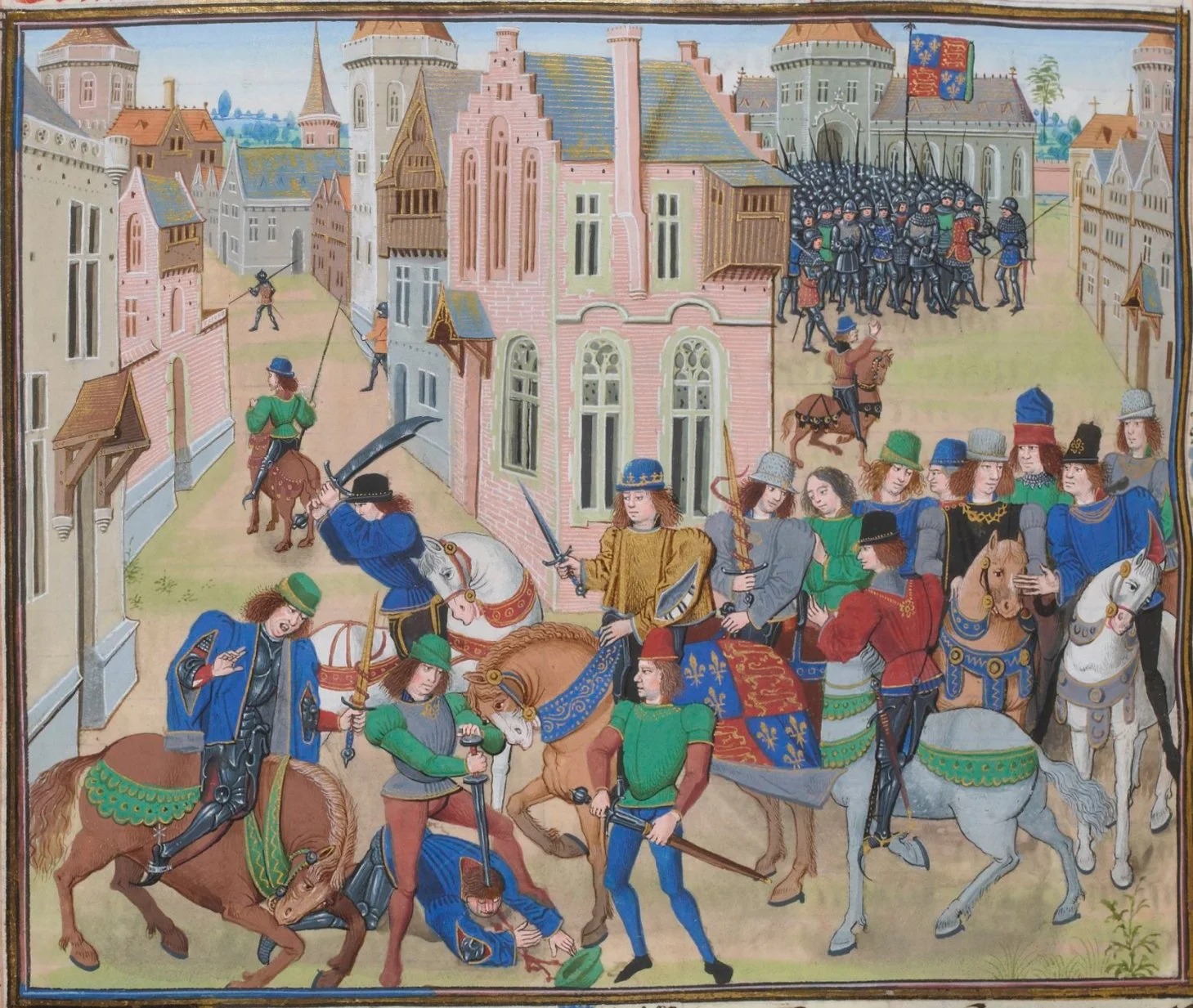
Tyler showed up with a second, much more radical list: abolish every noble rank beneath the king himself; dissolve the senior clergy down to a single reformed office; redistribute church and noble wealth among ordinary people; hand policing and courts over to local communities. Richard said yes — with one condition, that people continue to respect the monarchy itself. It should have ended right there. Instead, in the confusion, a scuffle broke out, and William Walworth, the Lord Mayor of London, struck Tyler with his sword, wounding him fatally in the neck.
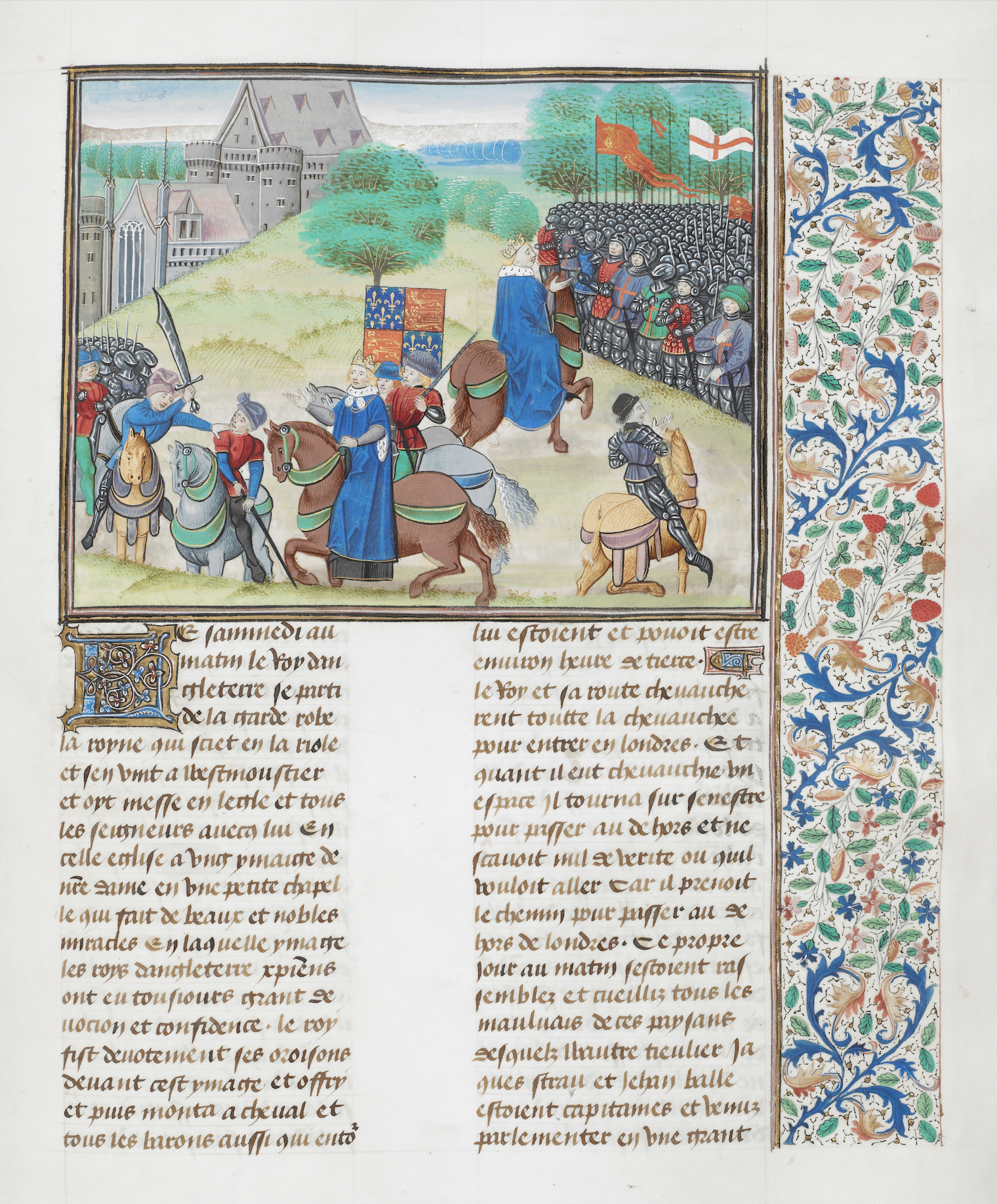
For a few seconds, the entire revolt hung on what happened next. The rebels raised their bows, ready to fire on the king's party. And then Richard — fourteen years old, completely alone in the moment that mattered most — rode straight at the crowd and declared himself their leader. I will be your king and your captain, he told them. And it worked. They lowered their weapons and followed him out of the city, trusting him one more time.
Tyler, meanwhile, was carried off to the hospital of St Bartholomew's, bleeding out. Walworth's men found him there, dragged him back into Smithfield, and beheaded him in the same field where the king had just led the rebels away. When the remaining crowd saw Tyler's head go up on a pole, they threw down their weapons and begged for mercy. In the space of one afternoon, the revolution was over.
The reckoning
What came next was a deliberate campaign of terror, brutal enough that it shocked even the chroniclers writing on the crown's side. Hundreds were killed before formal trials even started. Tyler was already dead. John Ball was caught, tried, and given a traitor's death — hanged, drawn, and quartered — on 15 July. Thomas Baker, the man from Fobbing who'd lit the fuse back on 30 May, was executed the same way on 4 July. Tellingly, plenty of wealthier participants were quietly pardoned and went right back to their lives — which tells you a lot about whose rebellion the authorities were actually interested in punishing.
The crown wanted the whole thing forgotten, and mostly succeeded. There's no shrine to the rebels of 1381, no monument to people who came closer than almost anyone in medieval Europe to overturning the social order through sheer numbers and coordination. Whether it was a real turning point or just a blip on history's radar is still argued over.
But here's what I keep coming back to: these weren't unlettered peasants stumbling into violence. They were people separated from us by little more than a sliver of historical time, capable of holding complex, interlocking ideas about freedom, faith, taxation, and local self-government in their heads all at once — organized enough to fold all of it into a coherent set of demands that a fourteen-year-old king could sit down and actually negotiate over. They lost. Tyler was killed, Ball was executed, and within weeks the old order snapped mostly back into place. But the precedent never fully disappeared, and it points at something that's stayed true well past the fourteenth century: a government only works for as long as the governed are willing to be governed. The second that consent gets withdrawn, even briefly, everything downstream of it is suddenly up for negotiation.
The image that outlived the event
So here's where the art comes back in. The most enduring images we have of 1381 don't come from anyone who was actually there. They come from Jean Froissart's Chronicles, illustrated nearly a century later by illuminators working for aristocratic patrons — the same class the rebels had risen against. The most famous of these shows the Smithfield confrontation: Tyler and the boy-king face to face, each figure carefully labeled so a medieval reader would know exactly who was who, often with Tyler's death shown in the very same frame — negotiation and execution, compressed into one gilded panel. Froissart himself had little patience for what he called the "villain churls." The visual record of England's first revolution was made, almost entirely, by the people it had tried to overthrow.
That's the tension The Uprising inherits whether it means to or not: a six-hundred-year-old story about ordinary people trying to seize the narrative, told once again through an apparatus a long way removed from the people who actually lived it. Vellum and gold leaf, then, 35mm and a handheld camera, now. The medium keeps changing. The question underneath it doesn't: who gets to tell an uprising's story, and what does the telling leave out?
The Uprising opens in theaters September 11.
