
What Europeans Actually Saw When They Looked at 'Primitive Art
Five Movements, One Borrowed Idea
Walk into almost any early-1900s modern art gallery and you'll run into the phrase "primitive art." It's usually stuck on a label next to a mask or a carved figure from Africa or Oceania, sitting near a Picasso or a Kandinsky it supposedly "influenced."
Here's the thing worth knowing before we go any further: that word wasn't invented by the people who made the masks and carvings. It was invented by European scholars and artists, around 1900, right in the middle of Europe's colonial expansion across Africa and the Pacific. So before we talk about what European artists did with it, it's worth being upfront that the word itself came from outside — it says more about the Europeans using it than about the art itself.
With that said, let's look at what they actually did with it — because this idea, however loaded, ended up shaping some of the most famous art movements of the 20th century.
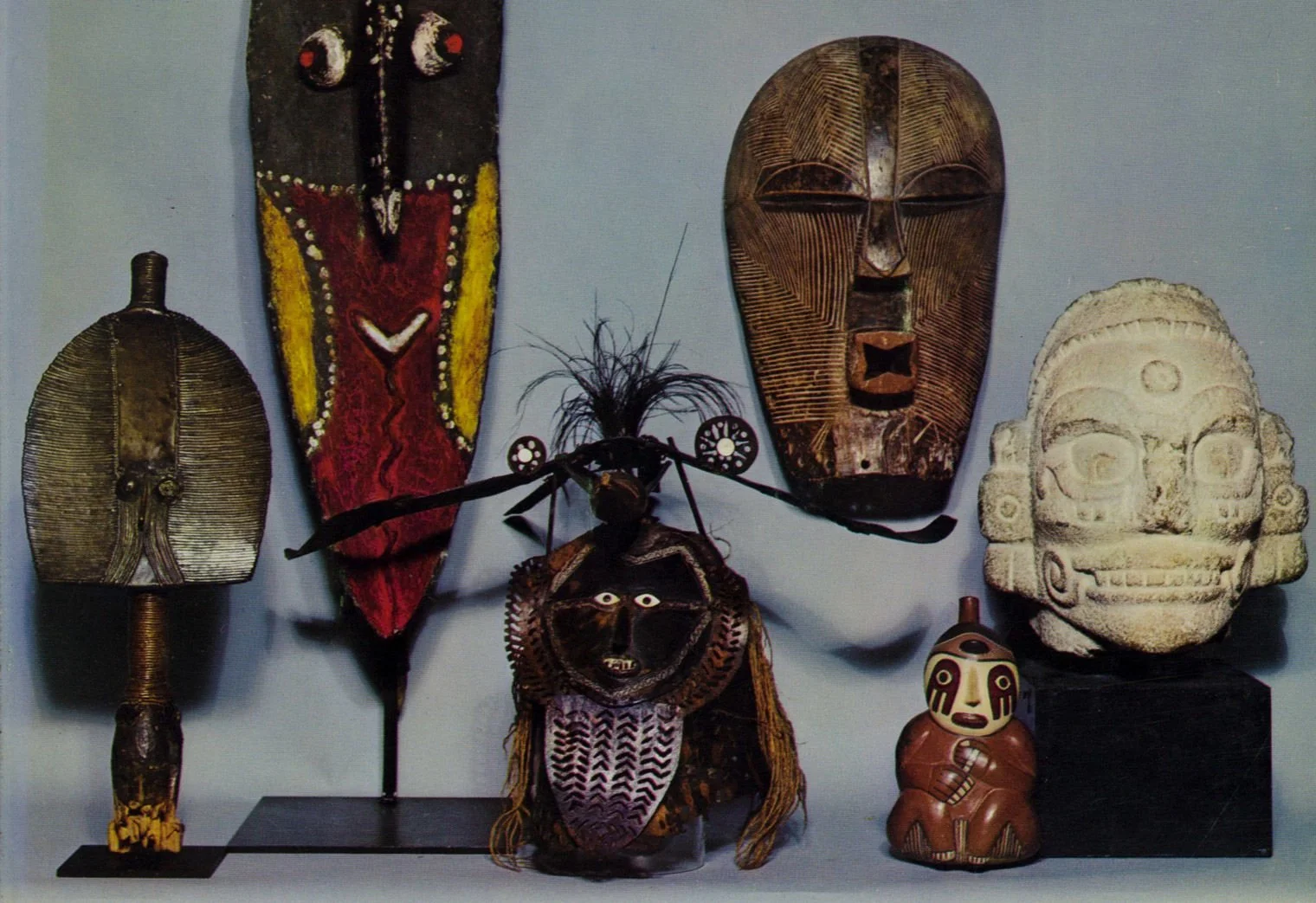
Five Groups, Five Very Different Reasons
Once European artists got interested in African and Oceanic art, they didn't all want the same thing from it. What each group saw in it tells you a lot about what that group already cared about.
The German Expressionists, especially Kandinsky and his circle (known as the Blue Rider), were after something spiritual. Kandinsky believed every shape carries a feeling or an idea inside it, whether or not it looks "realistic." He and his fellow artists thought African sculpture expressed emotion in a raw, direct way that felt lost in traditional European painting. For them, this art was a doorway to something spiritual — a truth that couldn't be captured by simply copying what things look like.
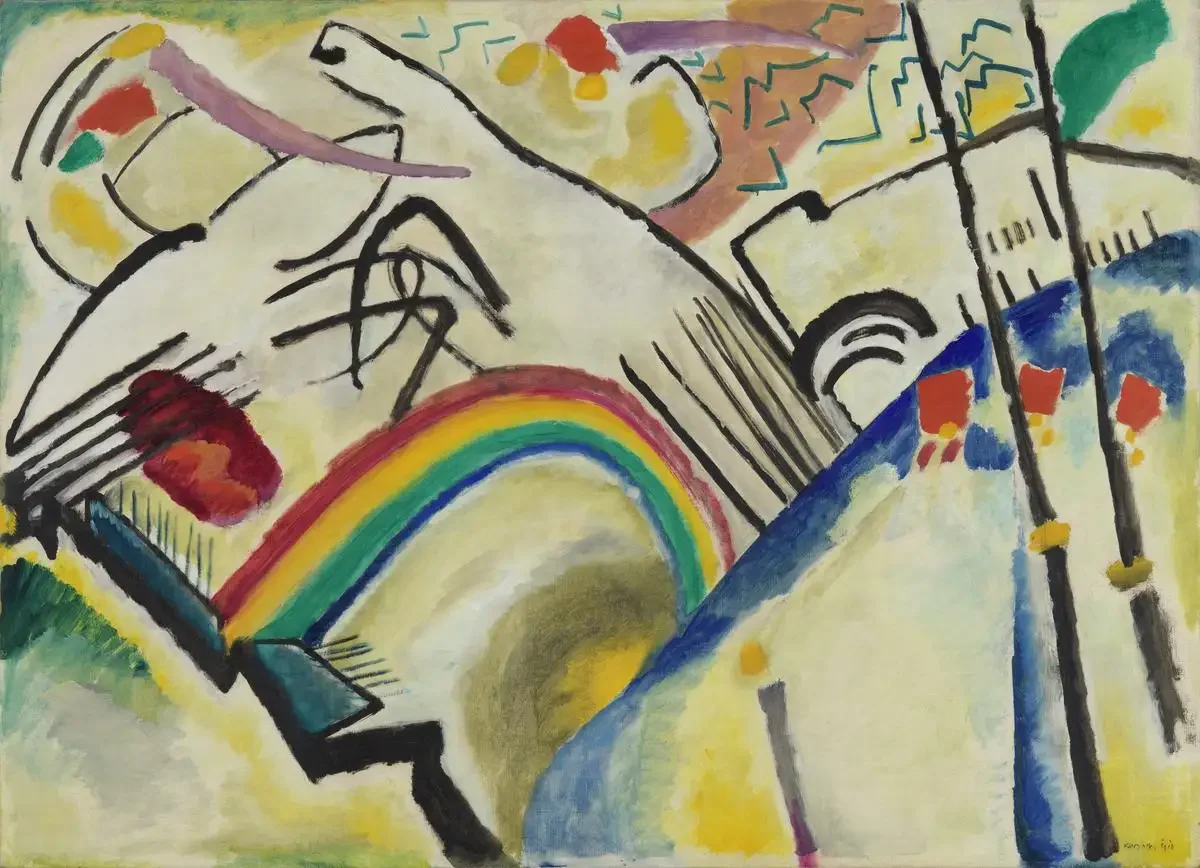
Cossacks, 1910/1911 - Wassily Kandinsky
The Fauves, a slightly earlier French group who paved the way toward Cubism, wanted something more visual than spiritual. They loved the bold, simple shapes in African sculpture — clean forms, no fussy realistic detail, everything pared down to its essentials. For them, this art was about pure design, not emotion.
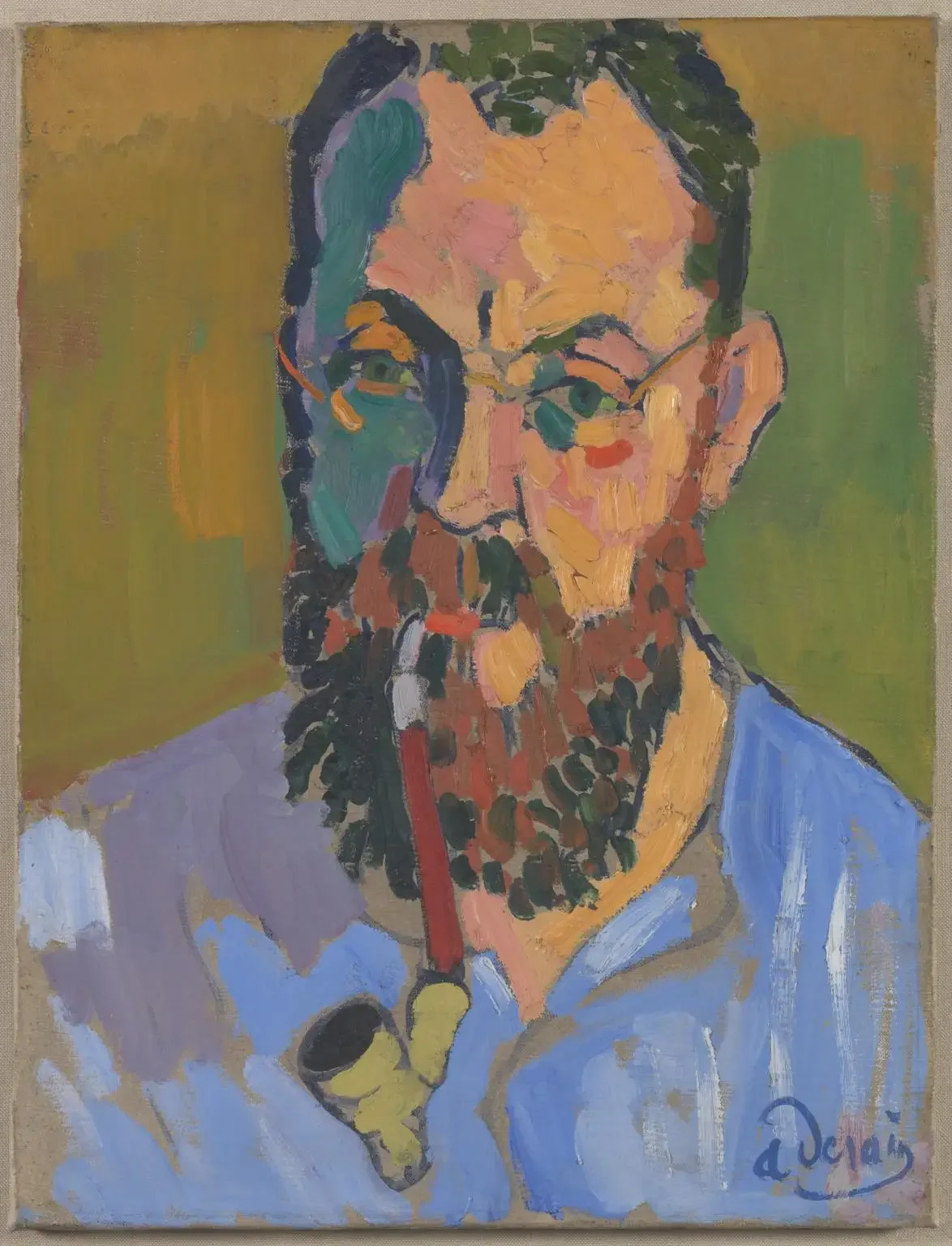
Henri Matisse, 1905 - André Derain
Picasso and Braque took it somewhere more technical. They were fascinated by how African sculptures could take a form apart into basic shapes and put it back together in a new way. That idea — breaking an object down and rebuilding it — became the seed of Cubism. Braque talked about wanting to paint something closer to the idea of a thing, not just what it looked like on the surface.
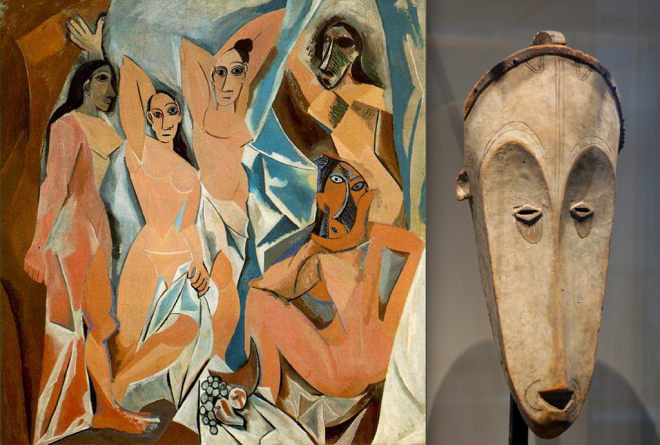
Left: “Les Demoiselles d'Avignon” (1907) oil on canvas by Pablo Picasso. Right: African Fang mask
The Dada artists, working during and right after World War I, were drawn to a completely different quality: what they saw as wildness or irrationality. Dada was angry at a European culture that had just built machine guns and gas warfare, and they wanted art that rejected "civilized" logic altogether. To them, "primitive" meant a rejection of the reason that had led Europe into a horrific war.
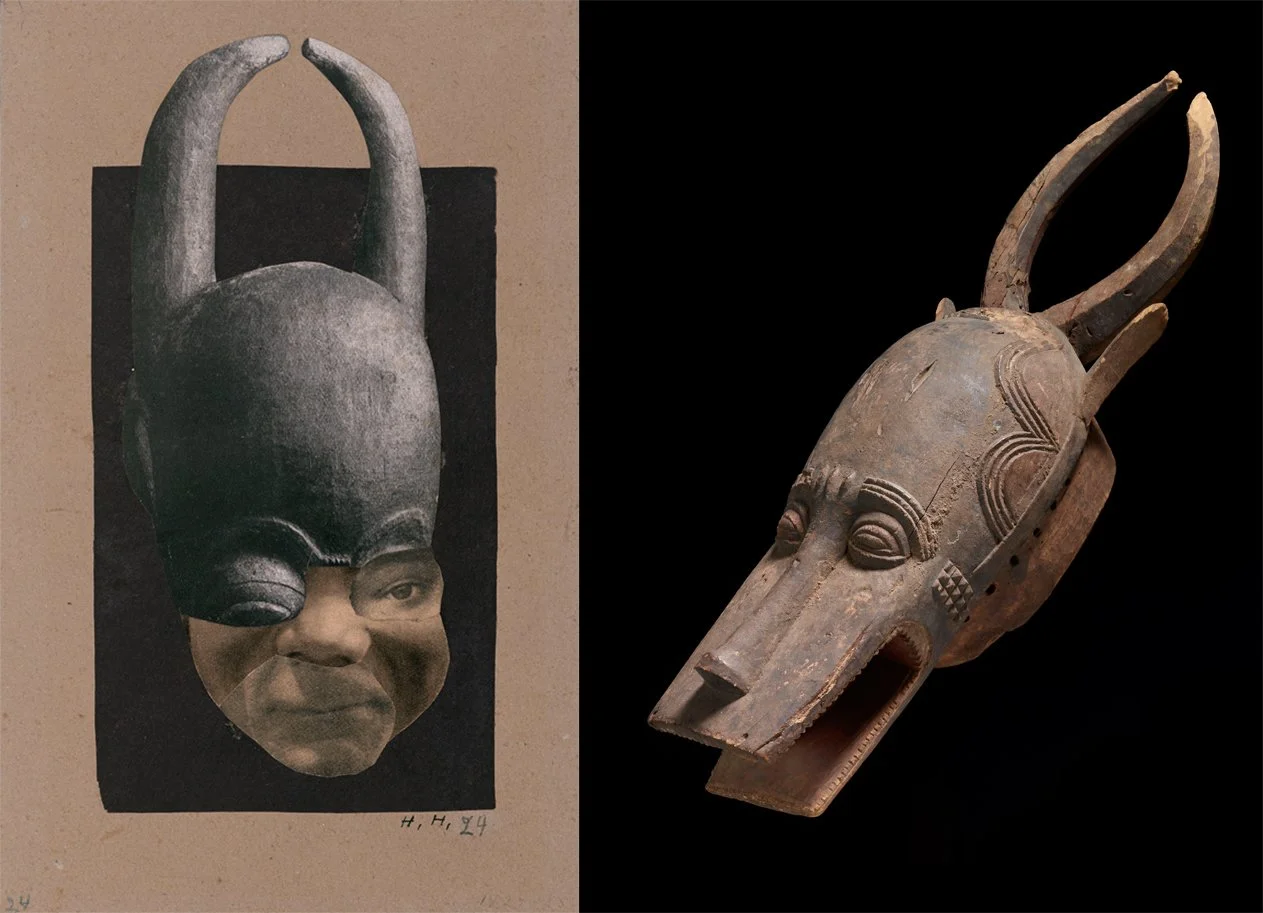
Left: Hannah Höch, From an ethnographic museum, No X. Right: a Helmet Mask from the Baule Region
The Surrealists, a bit later, connected this art to dreams and the unconscious mind. They believed African and Oceanic objects tapped into something below rational thought — the same strange, symbolic territory they were trying to explore through dream imagery and free association.
Notice the pattern: every single group found something different in this art, and in every case, it was really a reflection of what they were already looking for.
An Anthropologist Tries to Make Sense of It
While all of this was happening in artists' studios, a scholar named Franz Boas was trying to study the same art from a completely different angle — not as inspiration for a painting, but as a serious subject of research in its own right.
Boas was an anthropologist, which meant his job was to study cultures scientifically rather than raid them for artistic ideas. He pushed back against the assumption, common at the time, that this art was somehow simpler or less sophisticated than European art. Instead, he argued for two things.
First, that African and Oceanic art follows the exact same basic principles you'd find in any art, anywhere in the world — balance, rhythm, patterns that repeat and vary. In other words, the people making this work weren't stumbling into pleasing shapes by accident. They were working with the same visual instincts every skilled artist works with, wherever they're from.
Second, that people enjoy looking at these objects for two separate reasons at once: partly because of what a shape means (its symbolism or story), and partly just because a well-made shape is satisfying to look at, the same way you might enjoy the shape of a well-designed chair without knowing anything about who built it or why.
Boas also noticed something specific about how symbolism worked in these cultures: a symbol carved into a mask or a figure was usually something the whole community would recognize and understand together. That's a real contrast with a lot of modern Western art, where an individual artist might invent a private symbol that only makes sense to them — something a viewer has to have explained to "get."
Put simply: Boas was trying to get people to take this art seriously on its own terms, as genuine artistic skill and shared cultural meaning — not just as a curiosity, and not just as raw material for European painters to borrow from.
The Big Takeaway
If you zoom out, every one of these groups was drawn to the same basic quality: this art didn't try to look "realistic" the way European painting had for centuries. But each group read that lack of realism completely differently — spiritual truth to the Expressionists, pure design to the Fauves, a structural puzzle to Picasso and Braque, rebellion to Dada, and the unconscious mind to the Surrealists.
So "primitive art" was never really one fixed thing. It was more like a mirror — every European movement that looked into it mostly saw what it already wanted to find.
Sources & further reading: Georges Duvignaud on Leo Frobenius; Wassily Kandinsky, "Concerning the Spiritual in Art"; André Breton and Louis Aragon on Surrealism; Franz Boas, "Primitive Art."
