
Why Is a Urinal Art?
A Short History of the Ready-Made
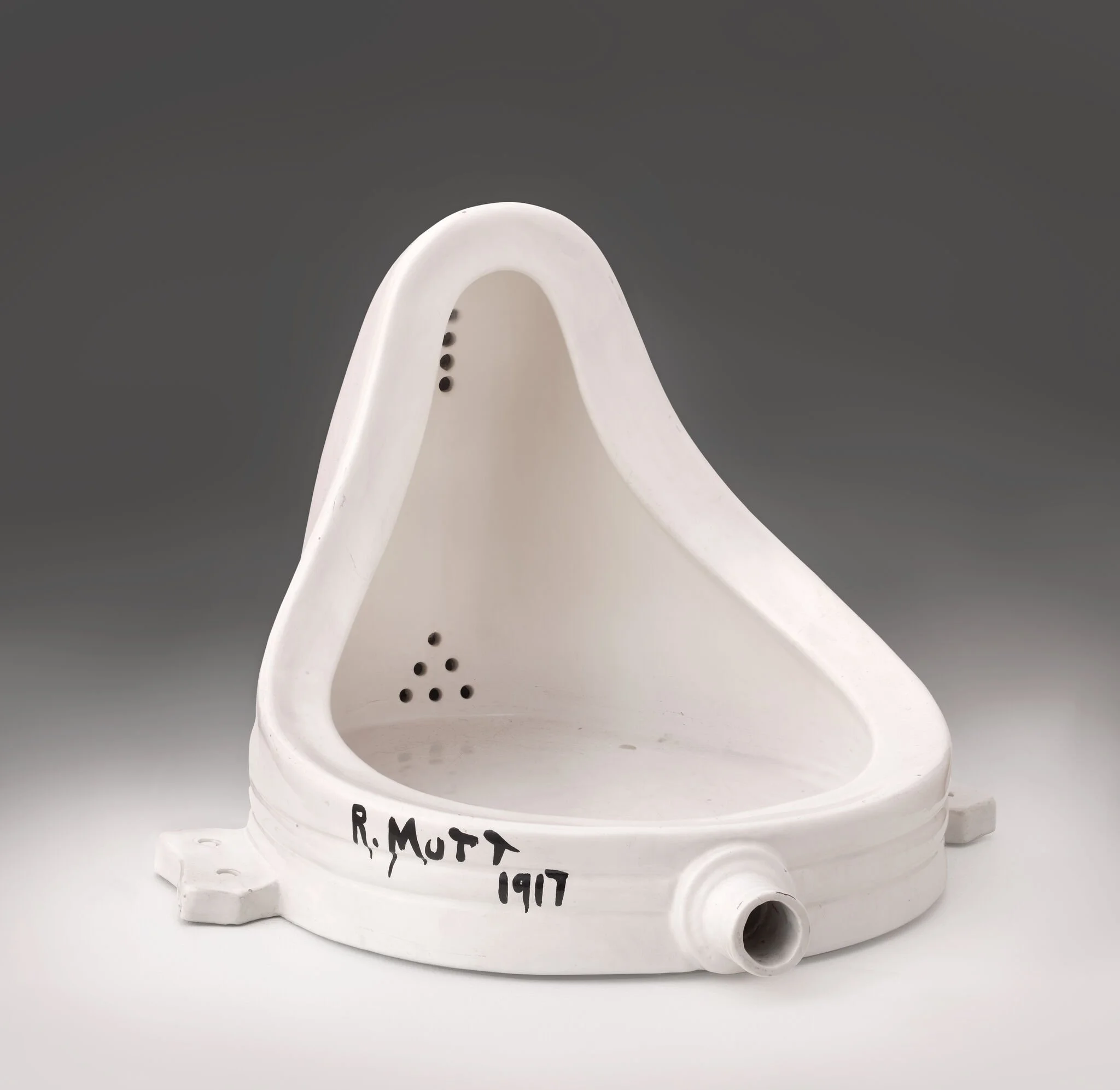
Fountain, 1917/1964 - Marcel Duchamp, Collection SFMOMA
Here's a scenario that has annoyed and delighted museum-goers for over a century: you walk into a gallery and see, mounted on a wall or pedestal, an ordinary object. A urinal. A bottle rack. A bicycle wheel bolted to a stool. No paint, no chisel marks, no evidence that a human hand shaped it in any special way. Just a mass-produced thing, plucked from a hardware store, sitting there with a title and an artist's name attached.
Your first reaction is probably: that's not art, that's a urinal.
That reaction is, in a strange way, exactly the point.
The Man Who Started It
The object in question is Fountain, and the man who put it there is Marcel Duchamp. In 1917, Duchamp bought a standard porcelain urinal, turned it on its back, signed it with a fake name ("R. Mutt"), and submitted it to an art exhibition in New York. The show's organizers — who had promised to display anything submitted — balked, and rejected it.
Duchamp's defense of the piece has become one of the most quoted ideas in modern art: it didn't matter whether he made the object with his own hands. What mattered was that he chose it, stripped it of its ordinary use, gave it a new title, and placed it somewhere that forced people to look at it differently. In doing that, he argued, he created a new way of thinking about the object — even though the object itself never changed.
That's the whole idea of the ready-made: an everyday, mass-produced object that becomes art purely through the artist's act of selection, not through any physical craftsmanship.
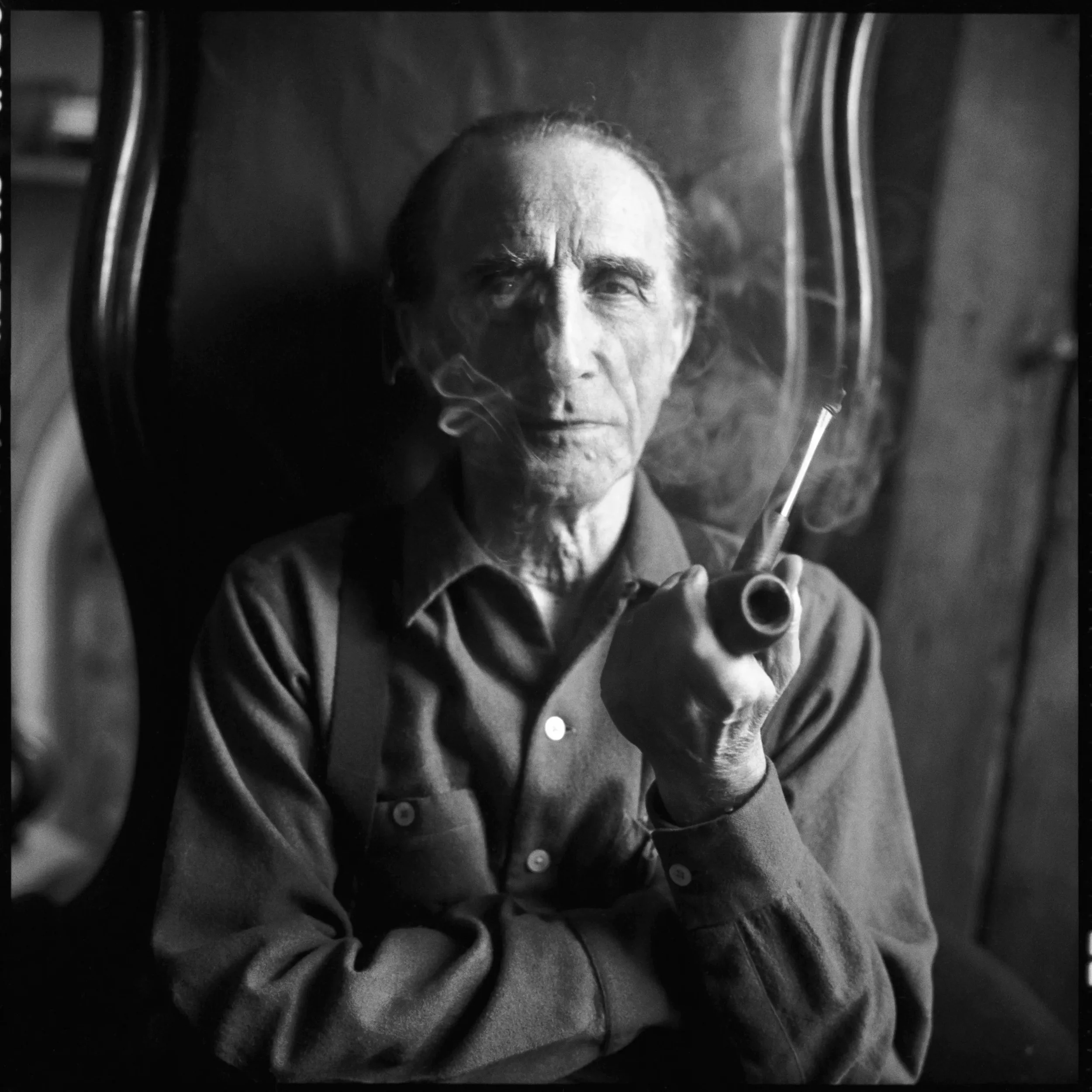
Marcel Duchamp, in New York, in January, 1958. Photograph by Richard Avedon
Why This Was Such a Problem for People
To understand why this was so radical, it helps to know what art was supposed to be, up until that point. For centuries, the value of an artwork was tied to skill — the labor of the artist's hand, the years of training, the visible evidence of talent on the canvas or in the marble. An artist was a maker. A craftsman-genius. Someone who did.
Duchamp, working alongside the Dada movement that emerged in Zurich during the First World War, was interested in tearing that whole idea down. Dada wasn't really a style — some of its own members described it more as an attitude, a way of living skeptically in a world that had just watched itself descend into an industrialized war. Its artists wanted to puncture the seriousness and self-importance of the art establishment, and one of the most effective ways to do that was to stop making things and start simply pointing at things instead.
So instead of an artwork, Duchamp offered a gesture. The artist's job wasn't the hand anymore — it was the decision.
The Objects Themselves
Duchamp didn't arrive at Fountain out of nowhere. He'd been building toward it for a few years.
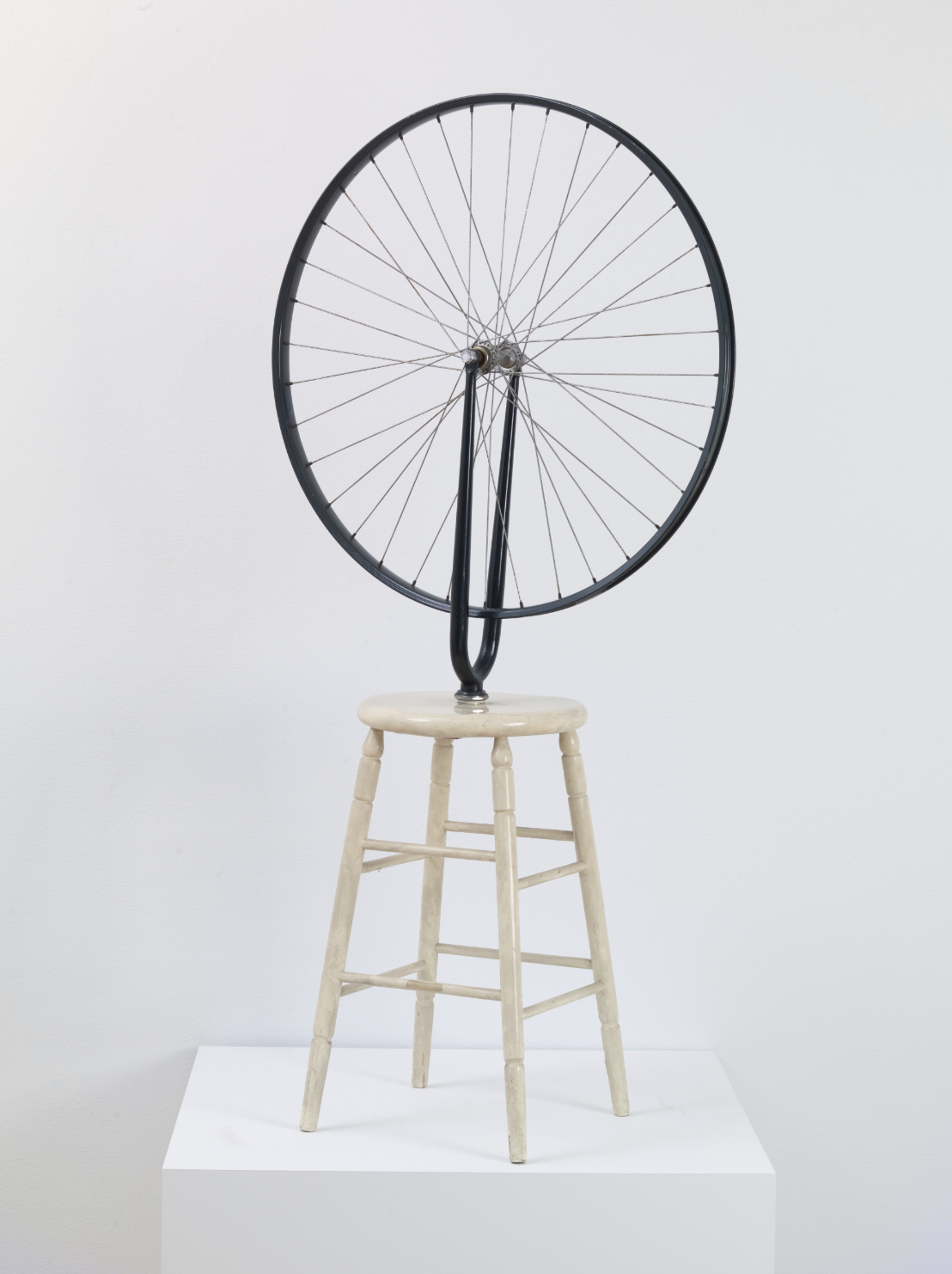
Bicycle Wheel (1913) came first, and it's technically a hybrid — Duchamp mounted a bicycle wheel upside-down on a wooden stool, combining two ordinary objects into one sculptural object. Because there's some assembly involved, this one is usually called an "assisted" ready-made rather than a pure one.
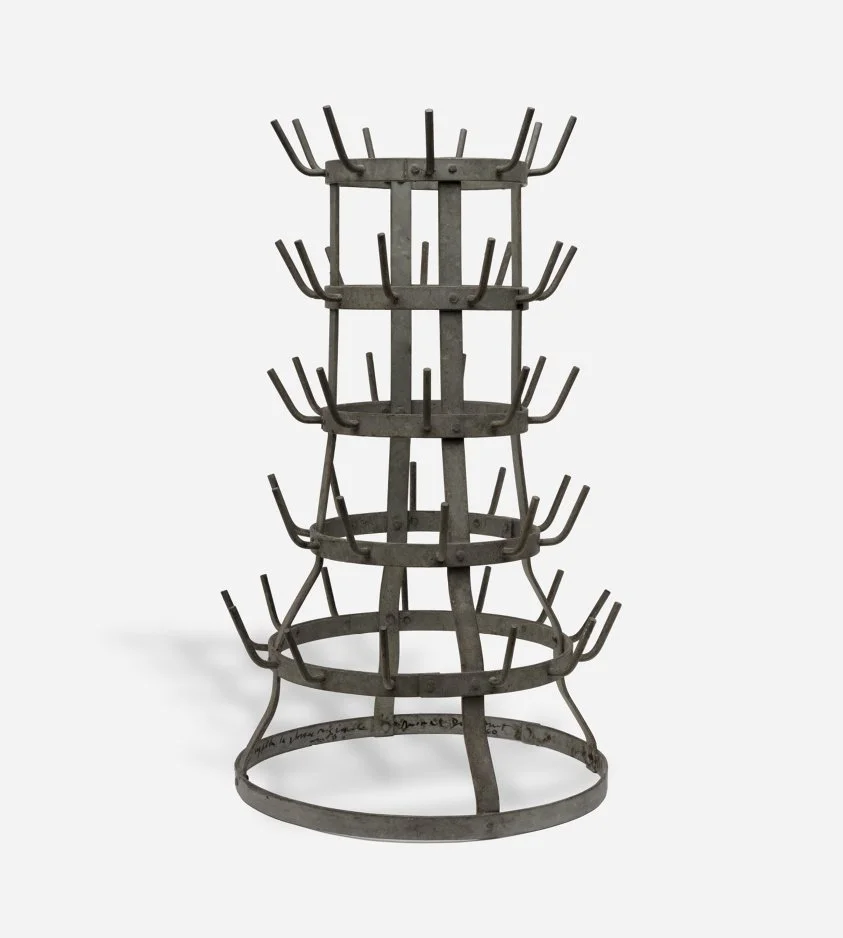
Bottle Rack (1914) is the real turning point. This is the first pure ready-made — Duchamp simply bought a bottle-drying rack, a mundane piece of household equipment, and declared it a sculpture. No assembly. No alteration. Just a decision.
Fountain (1917) pushed the idea into full public controversy, and it's the piece that's remembered as the ready-made's defining statement. Notably, the original was lost, and the versions in museums today (including the one most commonly reproduced) are later replicas authorized by Duchamp — a detail worth knowing if you ever go looking for "the" Fountain.
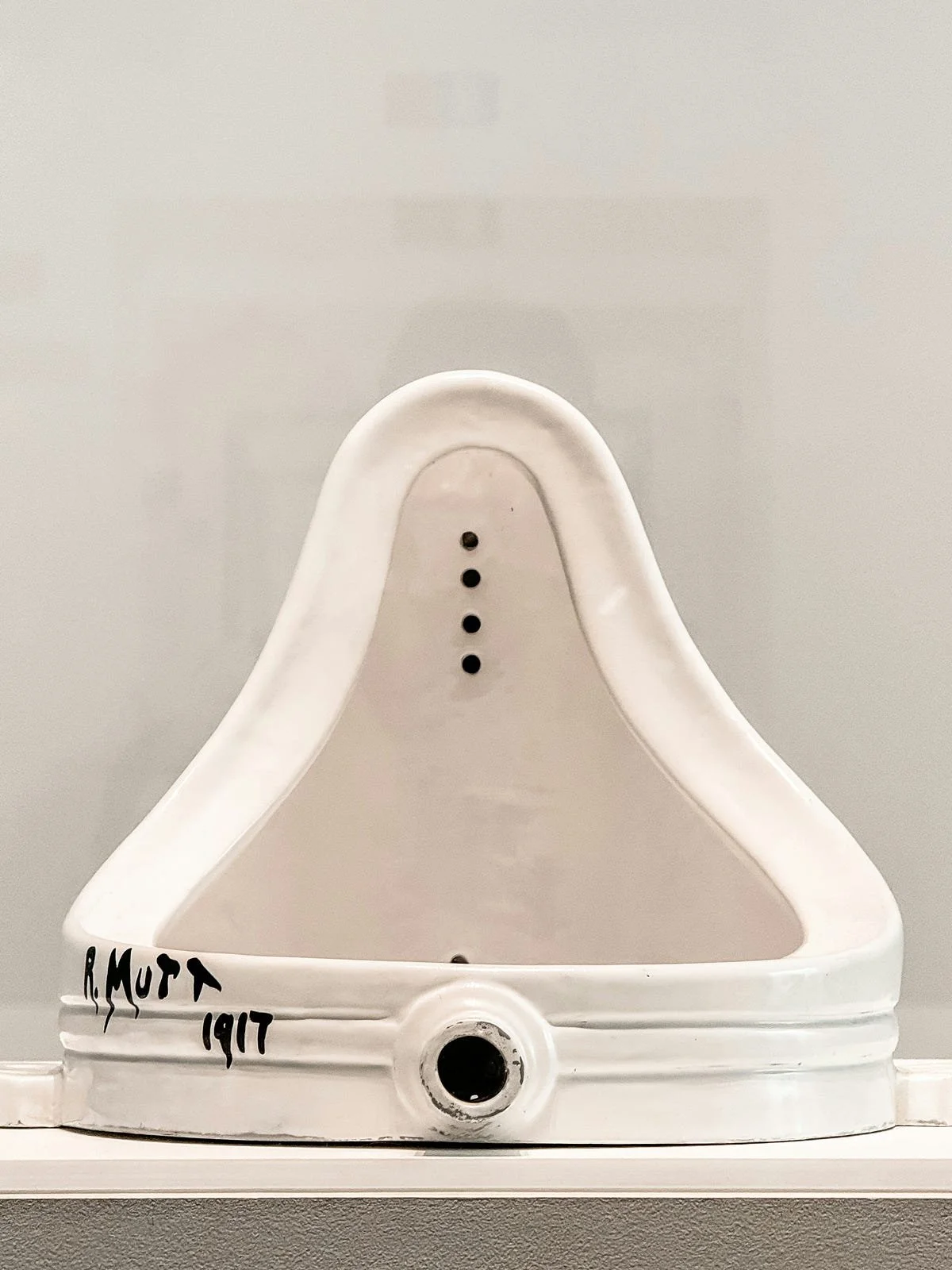
Crucially, Duchamp insisted the choice of object had to be almost arbitrary — driven by what he called visual indifference, not by taste or aesthetic pleasure. He wasn't picking things because they were beautiful. He was picking things precisely because they weren't.
The Ripple Effects
Once the idea was out in the world, it didn't stay contained to Duchamp. You can trace its influence through several later movements, even when those movements pushed back against parts of it.
Photography picked up on the same interest in the ordinary, stripped of emotional weight. Edward Weston's famous 1930 photograph of a single bell pepper is a good example — Weston was after an image so direct and unsentimental that it revealed the object without projecting feeling onto it, a very ready-made-adjacent ambition even though it's a photograph rather than a found object.
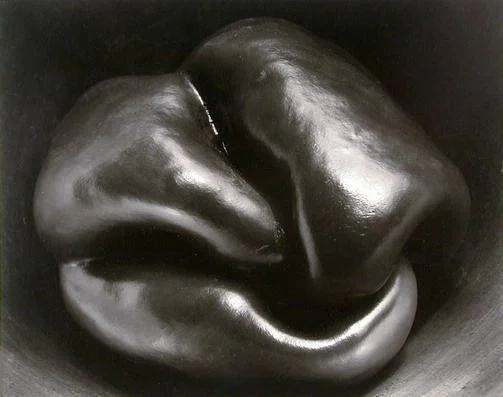
Pepper, 1930 - Edward Weston
Surrealism took the ready-made's love of chance and redirected it inward, toward the subconscious rather than the random. Where Dada's chance was mechanical and detached, the Surrealists were interested in a more subjective, dream-logic kind of chance. You can see this in Salvador Dalí's Lobster Telephone (1936) — not a ready-made in the strict sense, since Dalí physically combined and altered the objects, but clearly working in the tradition Duchamp opened up: take two ordinary things that don't belong together, and force a new meaning out of the collision.
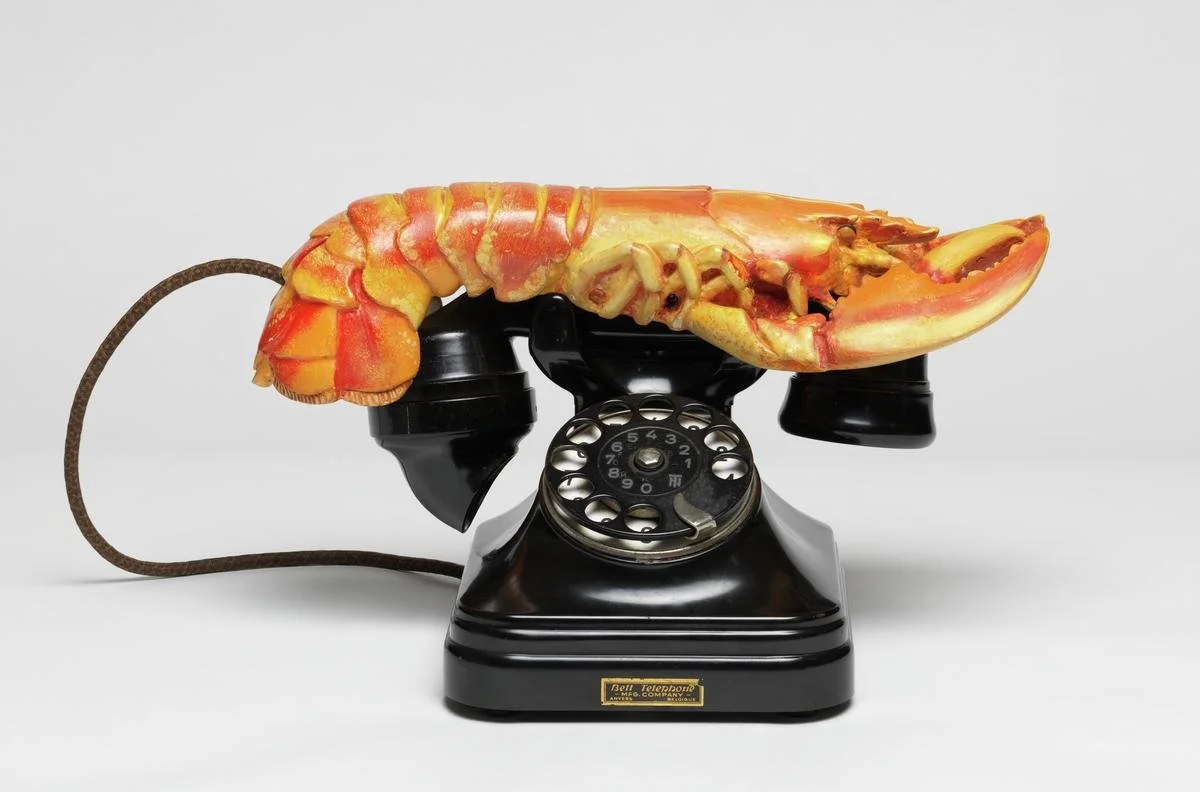
Lobster Telephone, 1938 - Salvador Dalí
Pop Art, decades later, picked up the ready-made's fascination with the everyday and ran it through mass culture instead of the hardware store. Andy Warhol's Brillo Box (1964) sculptures — wooden boxes silkscreened to look exactly like supermarket soap-pad packaging — weren't literal ready-mades (Warhol had them fabricated), but the whole point depended on the viewer mistaking, even briefly, a gallery object for a grocery-store object. That confusion is Duchamp's ghost in the room.
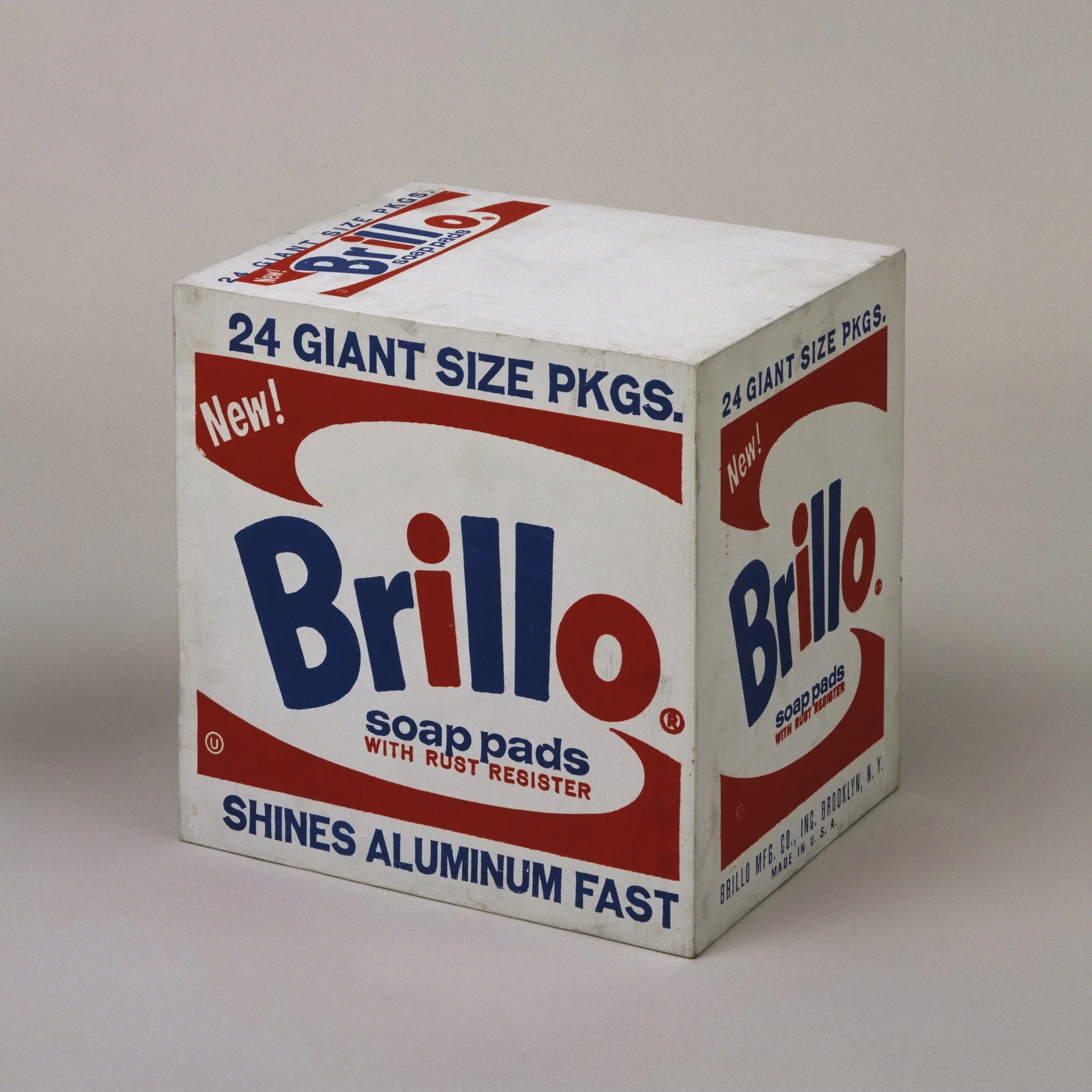
Brillo Box, 1964 - Andy Warhol
Why It Still Matters
The ready-made did something that's easy to take for granted now, precisely because it worked so completely: it separated the idea of an artwork from the making of an artwork. After Duchamp, an artist could be a thinker who directs meaning rather than a craftsman who produces objects. That shift is the reason conceptual art — art whose primary material is an idea rather than paint or stone — became possible at all.
It also permanently complicated the question museums still wrestle with: what belongs in the building, and who gets to decide? The ready-made didn't answer that question. It just made it impossible to ignore.
The philosopher Theodor Adorno put it in a way that still feels like the right closing note: the only artworks that count anymore are the ones that have stopped being works in the old sense at all.
So next time you're standing in a gallery, unimpressed by something that looks suspiciously like it came from a hardware store — that discomfort isn't a sign you're missing something. It's the exact reaction the piece was built to produce.
Sources & further reading: Octavio Paz, "Apariencia Desnuda: La obra de Marcel Duchamp"; Dawn Ades, "Dada and Surrealism" in Nikos Stangos's "Concepts of Modern Art"; Mario De Micheli, "Las Vanguardias Artísticas del Siglo XX"; Tate and Encyclopaedia Britannica entries on the ready-made.
